What Is Headless Shopify, and When Is It Worth Building?
A plain guide to what headless Shopify changes, what stays in Shopify, when a theme is better, and what a real custom storefront can support.
Headless Shopify is a custom storefront with Shopify behind it. Customers use a website built around the brand and the way it sells. Your team still uses Shopify for products, stock, orders and checkout.
The simple test: if Shopify runs the business well but its theme limits what customers can see or do, headless may be worth building.
What changes, and what stays in Shopify
A standard Shopify theme uses Shopify's own page and theme system for the customer facing website. A headless build replaces that layer with custom code. Shopify remains the commerce engine behind it.
Side by side
Shopify theme
Headless Shopify
Payments do not move into a risky custom system. Checkout, tax, shipping and order management stay with Shopify. The custom work is the storefront customers use before checkout.
Why a brand would build it
- The product needs more explanation, storytelling or interaction than a normal theme gives it.
- The brand needs tight control over how the storefront looks and behaves.
- Retail, trade, custom orders, presales or other audiences need different paths through one catalog.
- The website must connect Shopify to other systems without feeling like a collection of separate apps.
- The storefront needs room to change as the business grows.
A real example: Forma Strata
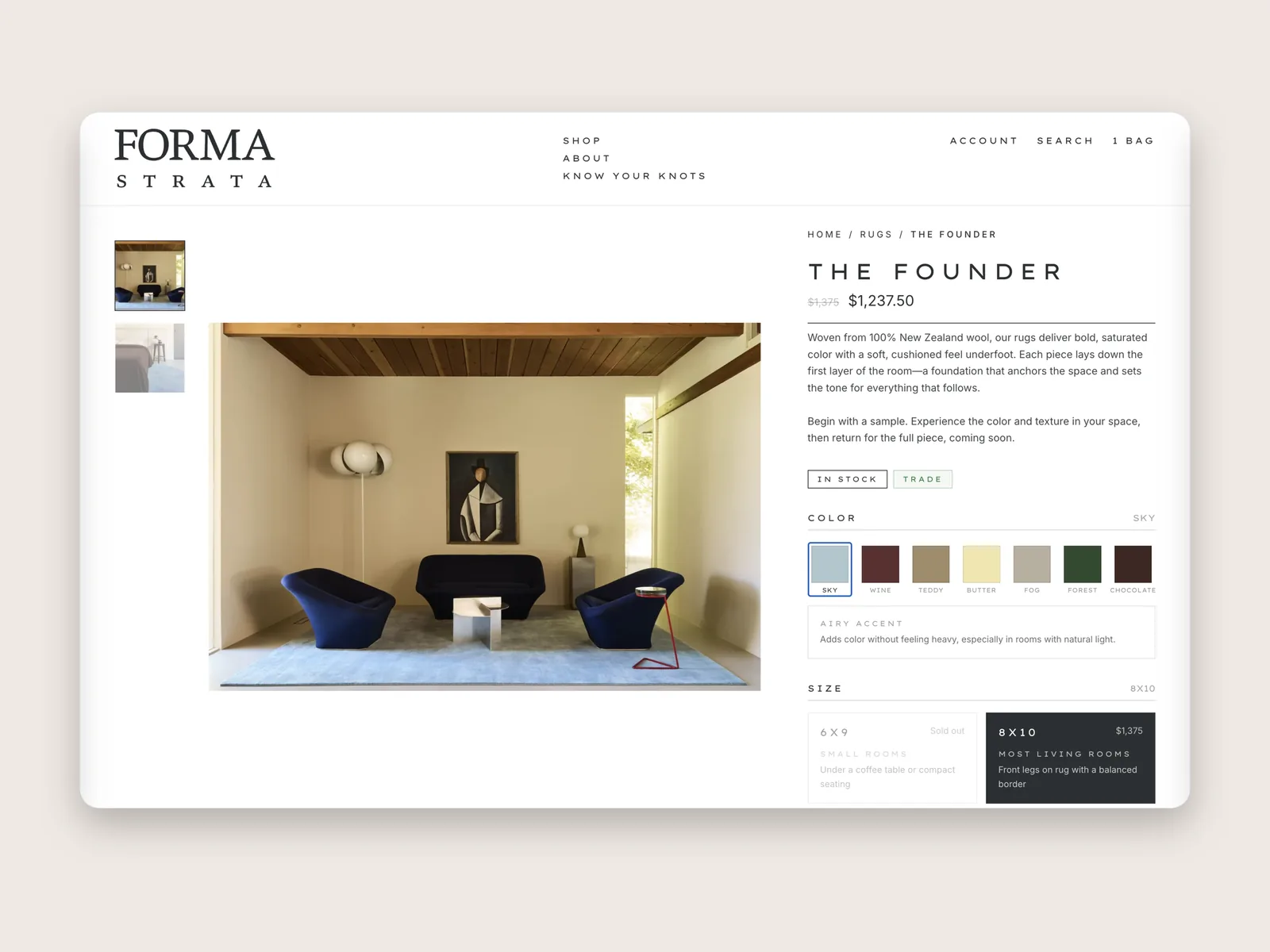
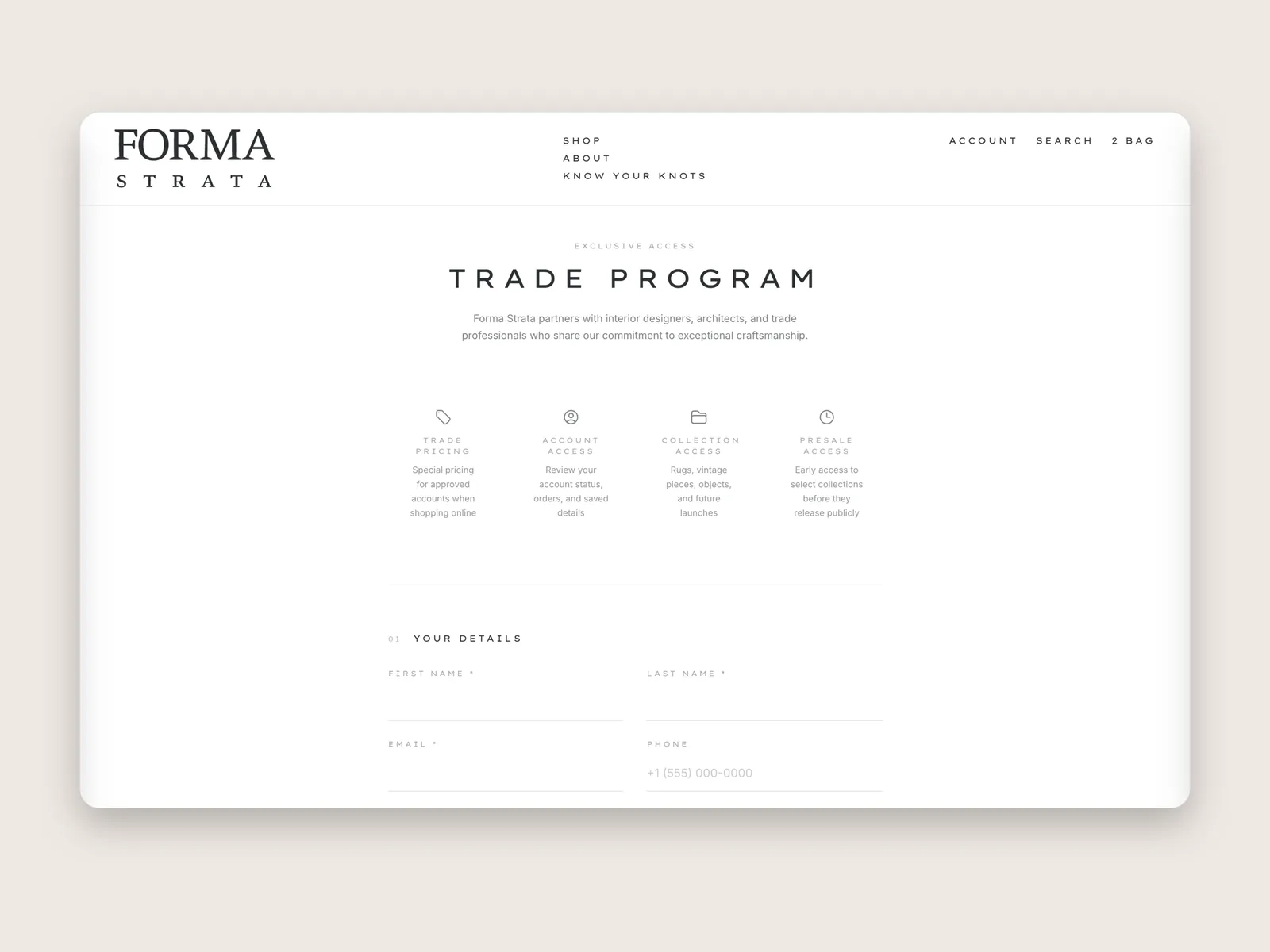
Forma Strata sells vintage objects and made to order rugs. A normal product grid was not enough. The same storefront needed to support public shopping, trade buyers, one of one pieces, custom rug requests and campaign launches without breaking the brand into separate websites.
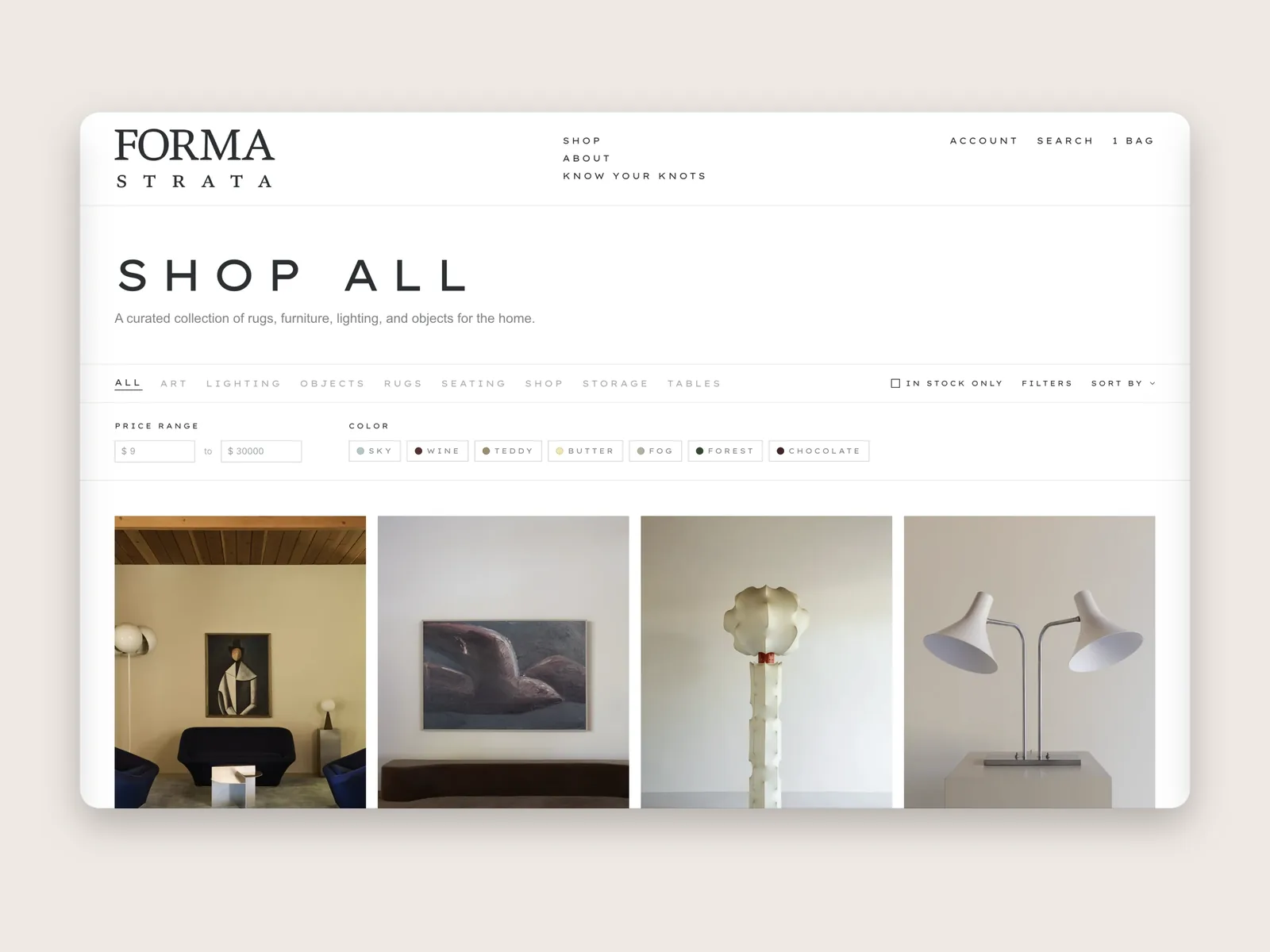
We built the storefront in React and connected it to Shopify through the Storefront API. Shopify still holds the catalog, inventory, orders and checkout. The website controls how customers discover products, understand them and move between each buying path.
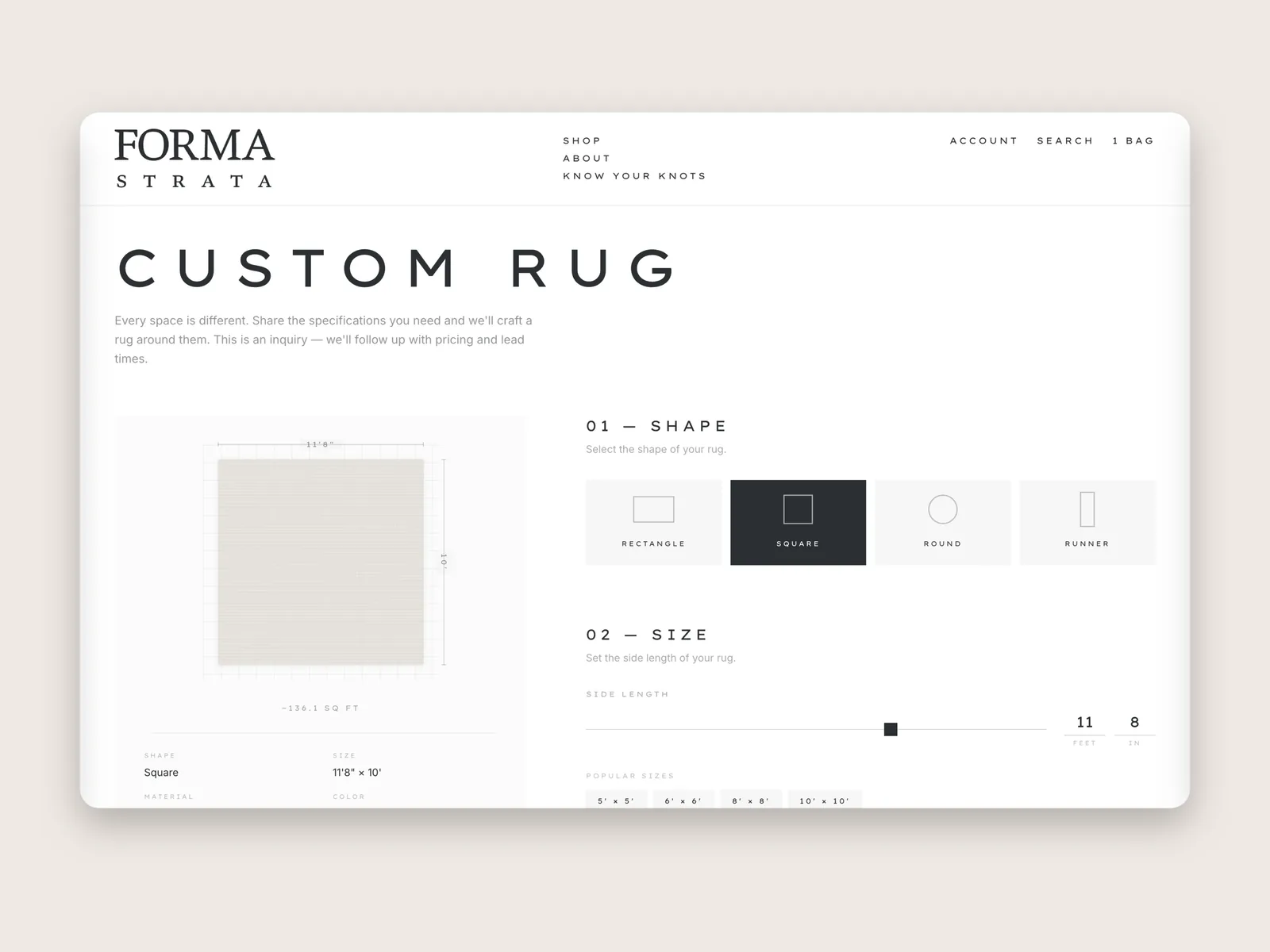
Custom rugs use a guided request flow instead of pretending every order belongs in a simple add to cart button. Trade customers can apply, sign in and shop through their own account experience. Campaign and presale pages use the same products and the same visual system.
When a Shopify theme is the better choice
Headless is not the premium answer to every Shopify project. A strong theme is often the smarter choice when the business has a familiar catalog, a normal path to checkout and a team that wants to make most website changes inside Shopify.
- Choose a theme when speed and a focused budget matter more than a custom system.
- Choose a theme when Shopify's normal product, collection and checkout flow already fits the business.
- Choose a theme when the team needs broad control without regular developer support.
- Do not choose headless only because it sounds more advanced.
Cost, timing and ownership
Displace Shopify storefronts start at $15,000. Headless Shopify builds start at $22,000. The final price depends on the catalog, content, languages, integrations and special buying flows. Forma Strata's first build took six weeks. Larger catalogs and deeper integrations need more time.
Custom code also needs care. Some Shopify apps require a custom integration. Changes outside the editing controls we build may need a developer. We hand over the code after full payment, document the system and can provide ongoing care from $2,250 per month.
The decision
If the hard part is visual polish, keep Shopify and build a better theme. If the business needs a storefront that a theme cannot express cleanly, build headless.
The right choice is the simpler system that supports how the business actually sells. We can review the catalog, the buying paths and the team's editing needs before recommending either one.
Start a projectTell us what you need to sell